BKK Landfill Fire Claim Help for Smoke, Soot, Odor, and Underpaid Insurance Damage
If your home or business was affected by the BKK Landfill Fire in West Covina, your insurance claim may involve more than visible fire damage. Smoke intrusion, soot residue, odor, HVAC contamination, contents exposure, and hidden restoration needs are often missed or under-scoped in the initial adjustment process.
Fires involving landfill conditions can raise concerns beyond ordinary surface cleaning. We represent California policyholders to document the full extent of smoke-related damage and push for proper claim payment when the scope is delayed, reduced, or underpaid.
Licensed California Public Adjuster | Fire and Smoke Claim Support
Why BKK Landfill Fire Claims Need a Closer Review
- Smoke and soot contamination may not be fully identified
- Odor and air-system impacts are often minimized or omitted
- Contents, textiles, and porous materials may need more than surface cleaning
- Environmental exposure concerns can create a broader restoration scope than the carrier initially allows
Request Claim Review
Tell us what is happening with your claim.
BKK Landfill Fire: April 2026 Background
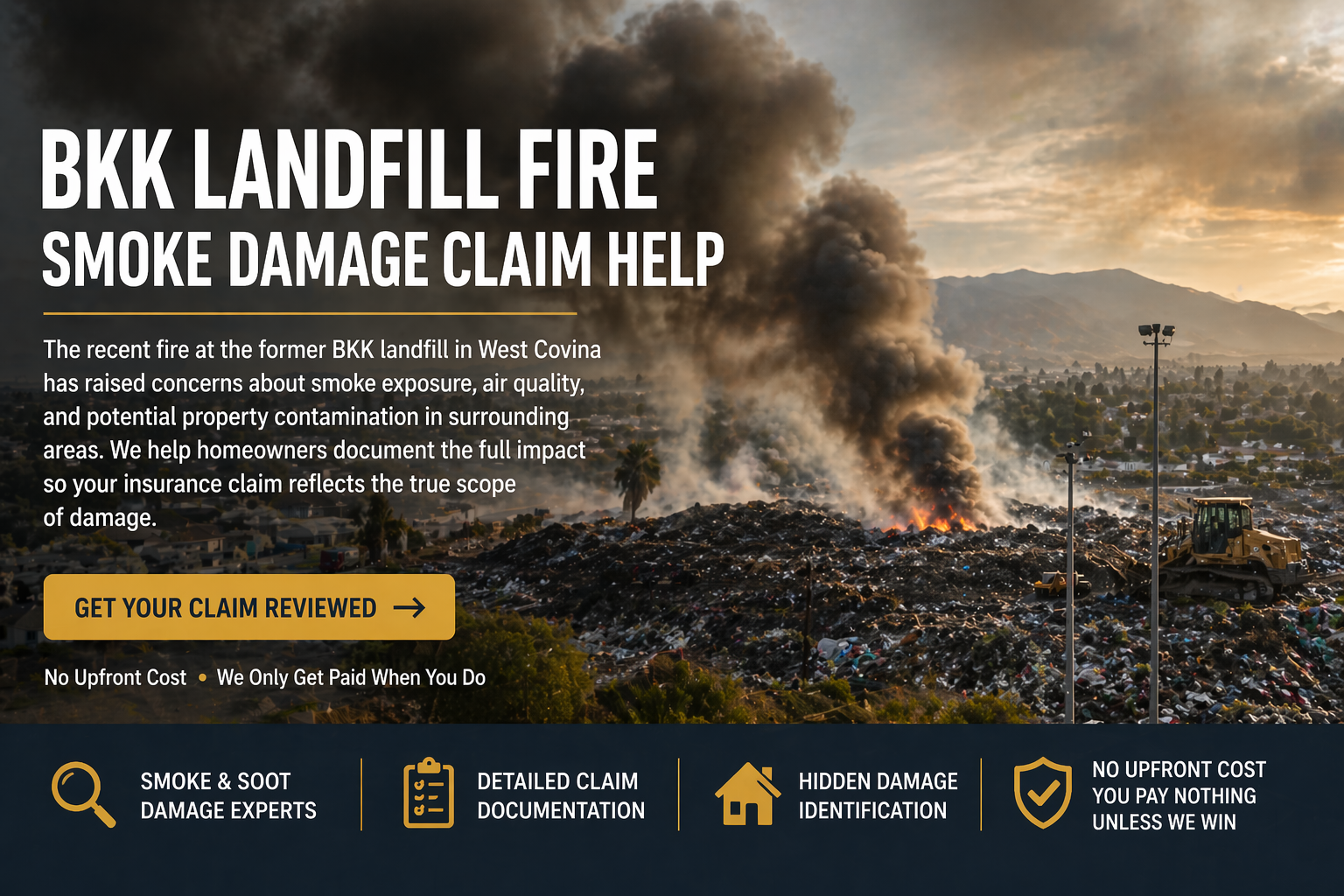
The BKK Fire was reported on April 20, 2026 at the site of the former BKK Landfill in West Covina, in the 2200 block of South Azusa Avenue. Public reporting stated the fire burned about six acres, prompted evacuations in the Rawhide neighborhood, and was contained the same afternoon.
Even after active flames are contained, nearby properties may still experience smoke intrusion, soot residue, odor, and contamination issues that are not always captured in the insurer's first estimate or inspection. That is especially important where the concern is smoke exposure and restoration scope rather than direct structural burn damage.
Last updated: April 21, 2026
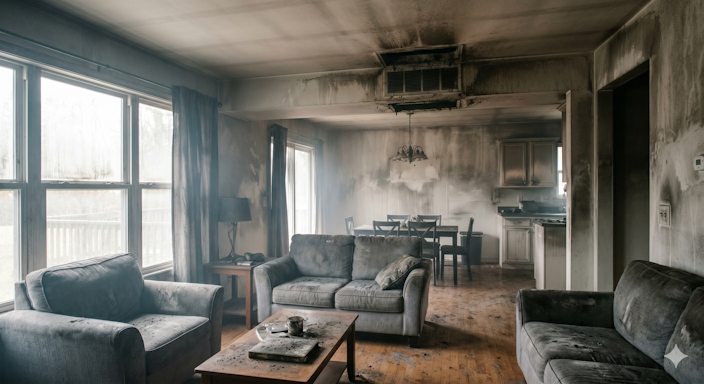
Smoke and Odor Contamination
Smoke can move through wall cavities, HVAC systems, insulation, textiles, and porous materials. Odor alone can indicate contamination that requires specialized cleaning, sealing, or material replacement rather than limited wipe-downs.
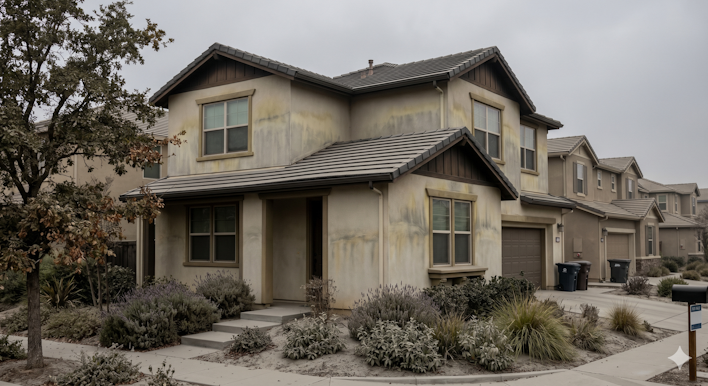
Cleaning vs Proper Restoration
Insurers often narrow these claims to general cleaning. We evaluate whether the property needs specialty smoke remediation, HVAC treatment, insulation replacement, contents cleaning, sealing, or other restoration steps based on the actual exposure and condition.
Landfill Fire Claims Can Involve More Than Visible Damage
When a fire generates heavy smoke near residential property, the claim may involve contamination concerns that do not show up like ordinary burn damage. If you smelled smoke inside the property, that can indicate exposure within HVAC systems, porous materials, and interior surfaces.
These losses are often under-scoped because the insurer focuses on what is visible from a brief inspection. Proper evaluation requires identifying the full extent of smoke, soot, odor, and restoration needs before the claim is finalized.
A landfill fire claim should be evaluated based on the actual condition of the property and the required restoration scope, not just whether flames physically reached the structure.
Potential Issues After the BKK Landfill Fire
- The estimate does not include full smoke remediation
- Your claim is delayed or still under review
- Contents or personal property exposure was minimized
- The carrier says damage is limited to odor or light cleaning
- HVAC system contamination was not included
- The insurer approved basic cleaning when replacement or specialty treatment may be necessary
We Represent You — Not the Insurance Company
We document damage, evaluate scope, and communicate directly with the insurance company so your claim reflects the actual condition of the property and the proper restoration work.
What Happens When You Contact Us
- Claim Review
- Damage Assessment
- Documentation & Scope Development
- Negotiation with the Carrier
Talk to a Public Adjuster About Your BKK Fire Claim
Get help evaluating smoke, soot, odor, contamination, and underpaid damage before you finalize your claim.