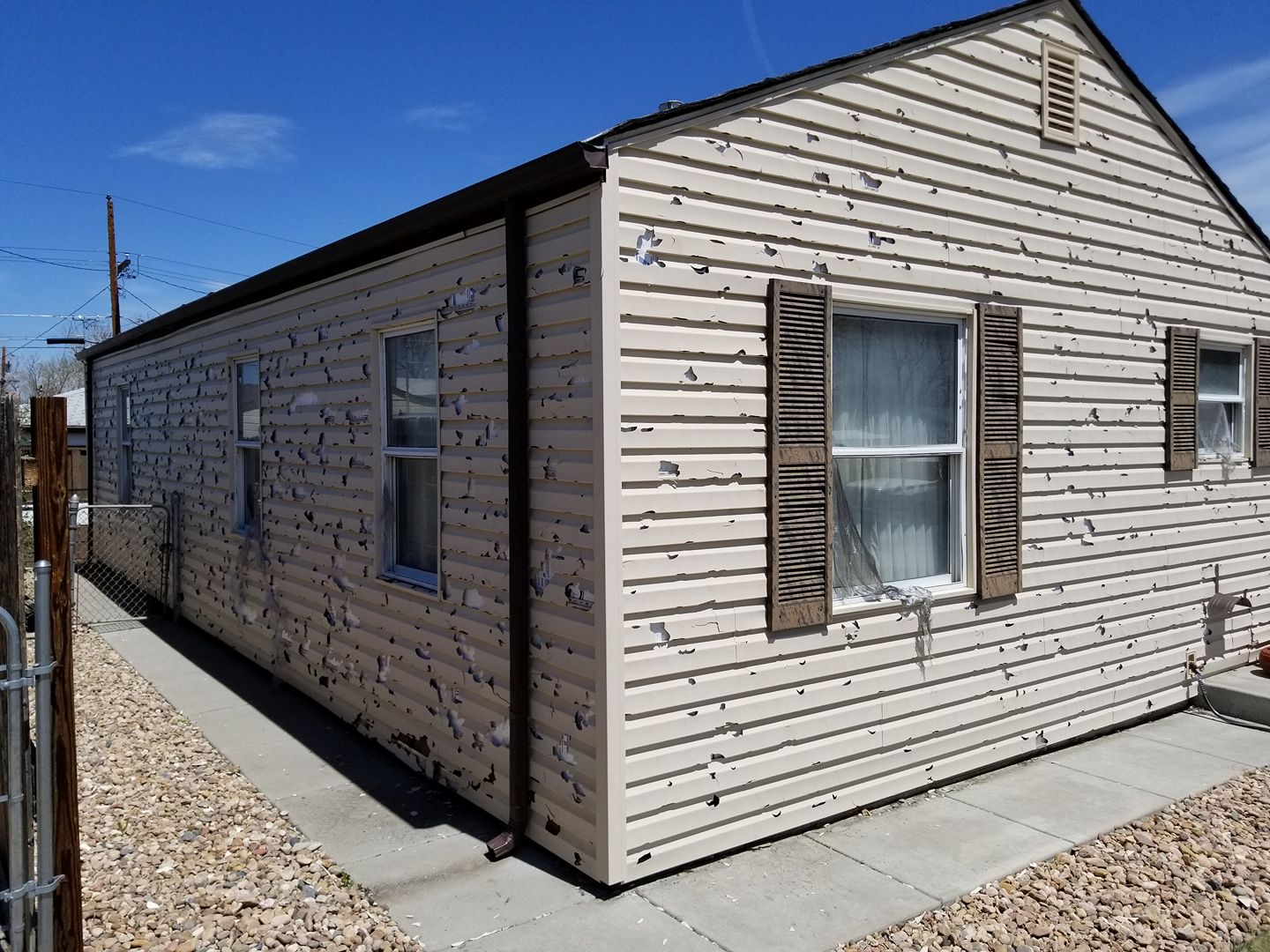
Hail damage claims require more than a roof inspection.
Prime Public Adjusting helps Colorado policyholders document hail and storm damage to roofs, gutters, siding, windows, paint, soft metals, and exterior building components. We review the insurance company estimate, identify omitted damage, and help present the full claim under the policy.
Hail Claim Review
Send the insurance estimate, photos, roof report, denial letter, or payment summary. We review whether the carrier addressed the full hail-related damage.
- Roof repair versus replacement
- Discontinued or mismatched shingles
- Collateral damage
- Underpaid exterior scope
- Appraisal readiness
Colorado Hail Damage Insurance Claim Help
Colorado hail claims are often disputed because the damage is spread across multiple building components. The insurance company may pay for a few vents, limited shingles, or minor gutter damage while omitting related exterior damage, repair access, matching concerns, or the practical requirements of performing a proper repair.
Prime Public Adjusting evaluates the entire claim. We do not look only at the first roof estimate. We review the roof system, exterior elevations, gutters, downspouts, windows, screens, paint, siding, soft metals, interior leaks, and any storm-created conditions that may affect the full repair scope.
Roof Damage
We review shingles, tile, metal roofing, ridge, vents, flashing, pipe jacks, skylights, and roof accessories for storm-related damage and repairability.
Exterior Damage
Hail can damage gutters, downspouts, fascia, siding, paint, windows, screens, garage doors, fencing, decks, and soft metal components.
Claim Disputes
We address common disputes involving old damage, cosmetic damage, matching, discontinued materials, brittle shingles, and partial roof repairs.
Why Hail Claims Are Often Underpaid
Hail damage claims are commonly underpaid when the inspection focuses too narrowly on isolated roof impacts. A storm can damage multiple components, and the estimate must account for the actual work required to complete a proper repair.
In many claims, the dispute is not simply whether hail hit the property. The dispute is whether the carrier included the full scope of damage, the proper repair method, the correct materials, the matching implications, the necessary access, and the reasonable cost to perform the work.
Common Carrier Positions We Review
- “The roof can be repaired.”
- “The damage is old.”
- “The shingles are brittle due to age.”
- “The shingles are still available.”
- “The dents are cosmetic only.”
- “Only one slope is damaged.”
- “No interior damage was caused by the storm.”
Roof Repair Versus Roof Replacement
A roof repair must be evaluated based on whether the repair can actually be performed correctly. That analysis may include shingle size, tab layout, exposure, color, weathering, seal strip location, fastening pattern, brittleness, roof slope access, discontinued materials, and whether the finished repair will create a visible mismatch.
For example, some older three-tab shingles measured approximately 36 inches wide with 12-inch tabs. Many newer three-tab shingles are wider, often with different tab spacing and exposure. Trimming a wider three-tab shingle is not the same as replacing a compatible shingle. A roof is a system, and each shingle must align with the surrounding course, tab spacing, exposure, and weathered appearance.
When a carrier proposes a spot repair, the repair method should be supported by the actual material characteristics and a reasonable explanation of how the repair will be performed without creating an improper or mismatched result.
Matching and Uniform Appearance
Matching issues often arise when a damaged roofing, siding, gutter, paint, or exterior material cannot be replaced with a reasonably uniform product. Color is only one part of matching. Size, profile, texture, exposure, finish, age, and weathering can all affect whether a repair is reasonably uniform.
Prime Public Adjusting reviews whether the proposed repair will restore the damaged property or whether it creates an obvious mismatch that should be addressed within the claim.
Collateral Damage Matters
A hail claim should not be limited to shingles. Collateral damage can help establish storm impact and may also identify omitted claim items.
- Gutters and downspouts
- Window screens and frames
- Soft metal vents and flashing
- Siding, paint, and trim
- Garage doors and exterior doors
- Fencing, decks, and exterior structures
Our Hail Claim Process
1. Review the Claim File
We review the carrier estimate, payment summary, roof report, photos, denial letters, and any contractor documentation.
2. Inspect the Property
We inspect the roof, exterior components, collateral damage, and any interior conditions that may relate to the storm.
3. Identify Omitted Scope
We look for missing line items, incorrect measurements, repairability problems, matching issues, and exterior components omitted from the estimate.
4. Prepare Documentation
We prepare photographs, measurements, estimates, and supporting explanations for the disputed or omitted damage.
5. Present the Claim
We submit the documented scope to the insurance company and address questions regarding the claimed damage.
6. Evaluate Next Steps
If the dispute continues, we evaluate whether further adjustment, reinspection, supplement, appraisal, or referral is appropriate.
Residential and Commercial Hail Claims
Prime Public Adjusting handles hail claims for homeowners, rental properties, HOAs, apartment complexes, commercial buildings, retail properties, offices, industrial properties, churches, and other insured structures.
Commercial hail claims can involve larger roof systems, mechanical units, coatings, specialty materials, business interruption concerns, tenant issues, and staged repair sequencing. These claims require careful documentation beyond a basic roof inspection.
We Commonly Review
- Asphalt shingle roofs
- Tile roofs
- Metal roofs
- Flat and low-slope commercial roofs
- Exterior paint and siding
- Gutters, windows, screens, and soft metals
- Interior water damage after storm events
Colorado Hail Damage Service Areas
Prime Public Adjusting assists policyholders throughout Colorado, including Denver, Colorado Springs, Fort Collins, Greeley, Parker, Centennial, Aurora, Lakewood, Littleton, Castle Rock, Boulder, and surrounding communities.
Denver public adjuster · Colorado Springs public adjuster · Fort Collins public adjuster · Greeley public adjuster
Hail Damage Claim FAQs
- Can insurance repair only part of my roof?
- Sometimes, but the proposed repair must be reasonable and must account for the actual roof material, repairability, matching, slope conditions, and policy requirements. A repair that cannot be performed correctly should be challenged with documentation.
- What if my shingles are discontinued?
- Discontinued shingles can create a material availability and matching issue. The claim should be evaluated based on whether a reasonably uniform repair can be completed with available materials.
- What if the insurance company says the hail damage is old?
- The carrier should be able to explain the basis for that position. We review storm history, collateral damage, photographs, roof condition, prior claim information, and the actual damage characteristics.
- Does hail damage always require roof replacement?
- No. Some roofs can be repaired. Others cannot be properly repaired because of the extent of damage, brittleness, material availability, matching, roof condition, or repair methodology.
- Can you help if my claim was already denied?
- Yes. We review denied hail claims and determine whether additional documentation, reinspection, estimate revision, appraisal, or another step may be appropriate.
- Do you handle commercial hail claims?
- Yes. We assist with commercial hail claims involving roof systems, exterior damage, mechanical units, tenant impacts, business interruption concerns, and complex repair scopes.
Get a Free Hail Damage Claim Review
If your Colorado hail claim was denied, underpaid, or limited to partial repairs, Prime Public Adjusting can review the estimate, photos, and claim documents.